


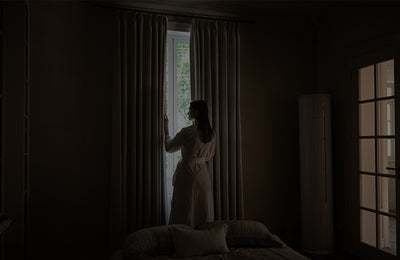


Can Curtains Really Block Noise? The Truth About Soundproofing & Dampening
It’s completely understandable to be skeptical when you read about "soundproof curtains," especially if you’re an urban dweller in a noise polluted area, a light sleeper stressed by traffic and echo, or if you operate out of a home office on a busy street. While noise stressors can affect everyone from pet owners to new parents, it’s reasonable for anyone to want to balance their personal space with unique interior design choices while also maintaining peace and quiet both day and night. And although nothing short of an underground bunker can guarantee absolute symphony hall-level acoustics, some window treatments are just better than others at dampening the intruding cacophony. So, back to the original question, can curtains really block noise?
The Short Answer: No, But... (Managing Expectations)
Let’s start with the biggest myth and put it to sleep from the start: no window treatment can block sound like a brick wall, which is what true soundproofing requires. The good news is that heavy, layered window treatments can significantly reduce the "sharpness" and intensity of city noise, making your room feel quieter and calmer. Imagine for instance our thick textured Waff Waffle Weave Pinch Pleated drapes with a dense lining, layered with our June Sheer linen, and then picture the dramatic reduction in noise interference that layers of that quality could afford.
 Waff Waffle Weave Pinch Pleated

Style Tip: Go beyond noise reduction by introducing sophisticated textures for acoustic dampening and a truly quiet, immersive space.
The Science of Silence: What Makes a Curtain "Acoustic"?
While it’s true that no curtain can guarantee you absolute silence from the outside world, let’s not dismay, as truly quality curtains can be excellent at absorbing and muffling sound waves, better known as sound dampening. This is why understanding the value of a superior drape over standard curtains goes beyond maintaining peace and serenity and instead should be viewed as an investment in longevity and enduring daily use that won’t fade over the years.
Factor 1: Mass (Weight is King)
To effectively stop sound from vibrating through your window, you absolutely need to rely on a physical barrier with high density and significant mass.
· A Standard, Thin Curtain: Generic, pre-fabricated, and lightweight curtains are generally too thin (around 200gsm) to offer any real impact on outside noise levels.
· The Three Girls Advantage: Our approach relies on heavy, high-density fabrics, often rating at 350-400gsm, like our Margot Handwoven-Look Blackout Pleated Curtain, which physically interrupts sound waves and dampens sharp noises from inundating your space.

Factor 2: Layers (The Air Gap)
The addition of a high-quality lining to any curtain creates a powerful layering effect, which is the second most important principle in creating noise reducing curtains and complete window treatments. The best approach is to select the optional ZeroLight TriCore™ 100% Blackout lining, which adds an extra layer of high-mass fabric and the crucial air gap.
Factor 3: The "Softness" Trap
Sound naturally bounces off stiff or hard surfaces, allowing harsh and sharp tones to penetrate your room, but soft, porous surfaces like dense fabric help to absorb those sound waves instead. This effect can be amplified by choosing textured drapes that break up sound waves and absorb them almost instantaneously.
· The Acoustic Hurdle: Factory-Stiff Curtains are often coated in sizing chemicals that help to hold their shape but inadvertently bounce and refract sound, preventing the fabric from absorbing acoustic energy and actually creating a harsher space.
· Softness Performance: Our Pre-Washed Process removes any stiff sizing chemicals, ensuring that a product like our Fuzz Chenille Blackout arrives relaxed and soft enough to improve acoustic stability and better contribute to effective sound dampening.

The Best Fabrics for Noise Reduction (Ranked by Physics)
We want to look beyond just the aesthetics of the curtain and focus on the fundamental science behind why certain fabrics are the best curtains for traffic noise.
Rank #1: Velvet (The Acoustic Champion)
Velvet is arguably the acoustic drapes champion, as its soft texture isn’t just a surface layer, but rather a deep, 3D pile structure. The deep, tiny fibers in velvet are similar to acoustic foam and work to trap and absorb sound waves better than any flat-woven fabric.

Celia Jacquard Velvet Geometric Weave
Rank #2: Lined Blackout Curtains (The "Layering" Effect)
Here, we focus on the science of "decoupling,” the principal that sound loses a significant amount of energy when forced to pass through different mediums, or in the instance of lined blackout curtains: fabric, air space, and then the lining. Adding a lining like our ZeroLight TriCore™ 100% Blackout lining to a thick drape like our Thea Striped Pinch Pleated Curtains provides maximum light-blocking and enhanced sound reduction benefits.

Thea Striped Pinch Pleated Curtains
The "Do Not Buy" List
Choosing fabrics like polyester or certain types of silk only offer minor decorative benefits while providing zero advantages in the way of sound dampening curtains. The uniformly smooth surfaces of these materials actively refracts sound waves back into the room, potentially making it worse.
Style Tip: Try finding the perfect textured drape for your space, like our Elise Knitted Garment Curtains, to create an additional acoustic hurdle against sharp sounds.

Elise Knitted Garment Curtains
How to "Hack" Your Installation for Maximum Quiet
The effectiveness of your noise-reducing curtains relies as much on how you hang them as which curtains, fabrics, and textures you choose.
Tip 1: Go Wall-to-Wall
In order to make certain that sound doesn’t seep through any gaps, make sure your curtains cover the entire wall, not just the window. This ensures complete encasement of window and frame, helping to dampen any outside noise.
Tip 2: The "Puddle" Effect
Allowing your drapes to intentionally puddle on the floor helps to create a seal at the bottom gap and keeps noise from skirting across the floor. Read our Guide on Extra Long Curtains!
Tip 3: Maximize Pleats
More pleats means more soft surface area in the room to absorb sound energy. Remember our lesson on decoupling, and the way sound reacts to passing through multiple layers.
· Choose Proper Fullness: Set a goal of a minimum of 2.5x and ideally a 3x fullness ratio to ensure deep, sound-trapping folds. You can learn more in our Ultimate Curtain Fullness Guide!
· Maximize Surface Area: Consider Pinch Pleat Styles, like our Motti Texture Pinch Pleated Curtains, as they naturally maximize surface area due to their tailored folds, essentially trapping sound waves.

Style Tip: When choosing an installation setup, opt for a ceiling-mounted track over a standard rod to eliminate the top gap and improve sound absorption.
FAQ: Real Reader Questions Answered
Q: Do soundproof curtains really block sound, or are they just a gimmick?
A: While true soundproofing is unrealistic, high-quality curtains with dense linings are highly effective at muffling sharp external noises.
Q: What is the single most important factor for maximizing acoustic benefit?
A: Creating layered mass by choosing a blackout lining to add density and decoupling is key.
Style Recap & Final Takeaway
Ready to turn down the volume of the outside world? Remember:
· Weight matters: choose high-density fabrics for real noise reduction.
· Layer up: pair thick drapes with dense linings for maximum sound absorption.
· Fullness counts: aim for deep, sound-trapping folds.
Order a Free Swatch of our high-density Velvet or 400gsm Blackout fabric to feel the weight for yourself and get started on your journey to the best sound dampening curtains available.
Leave a comment
All comments are moderated before being published.